Turkey Hunting (Forest County) and Trout Fishing (Tionesta Creek, North Fork/Redbank,Allegheny River)

DSCF0401

Each Spring, we spend a week in early May hunting gobblers in Forest County Pa coupled with trout fishing. Our base is a camp in Marienville,PA owned by my 2 brothers-in-law (Ken and Ron Hill). This year was no different, except for the weather. Cold temperatures mixed with snow and rain made both hunting and fishing a challenge.

Ken (Butch) Hill’s grandson (Barney) did bag a “Jake” while hunting with Butch’s son Lance. Those 3 tagged up on the trout in the afternoon before the weather got nasty on the Tionesta Creek. Ron and I had good success on the North Fork of the Redbank and limited success on the Allegheny River (above Coudersport).

North Fork/Redbank: This stream is located in Brookville, PA and has a fly fishing only area right downtown. Our first day we found a good Caddis hatch and fish rising to both Caddis and midges. In addition to Caddis, we caught fish on Cracklebacks, BWOs, and gray hackle flies. A successful day!  On our second day, the weather turned colder (stream temperature 42 degrees) but there was a great Blue Winged Olive hatch but no fish rising. We’ll be back and with different weather conditions, we believe there will be different results.

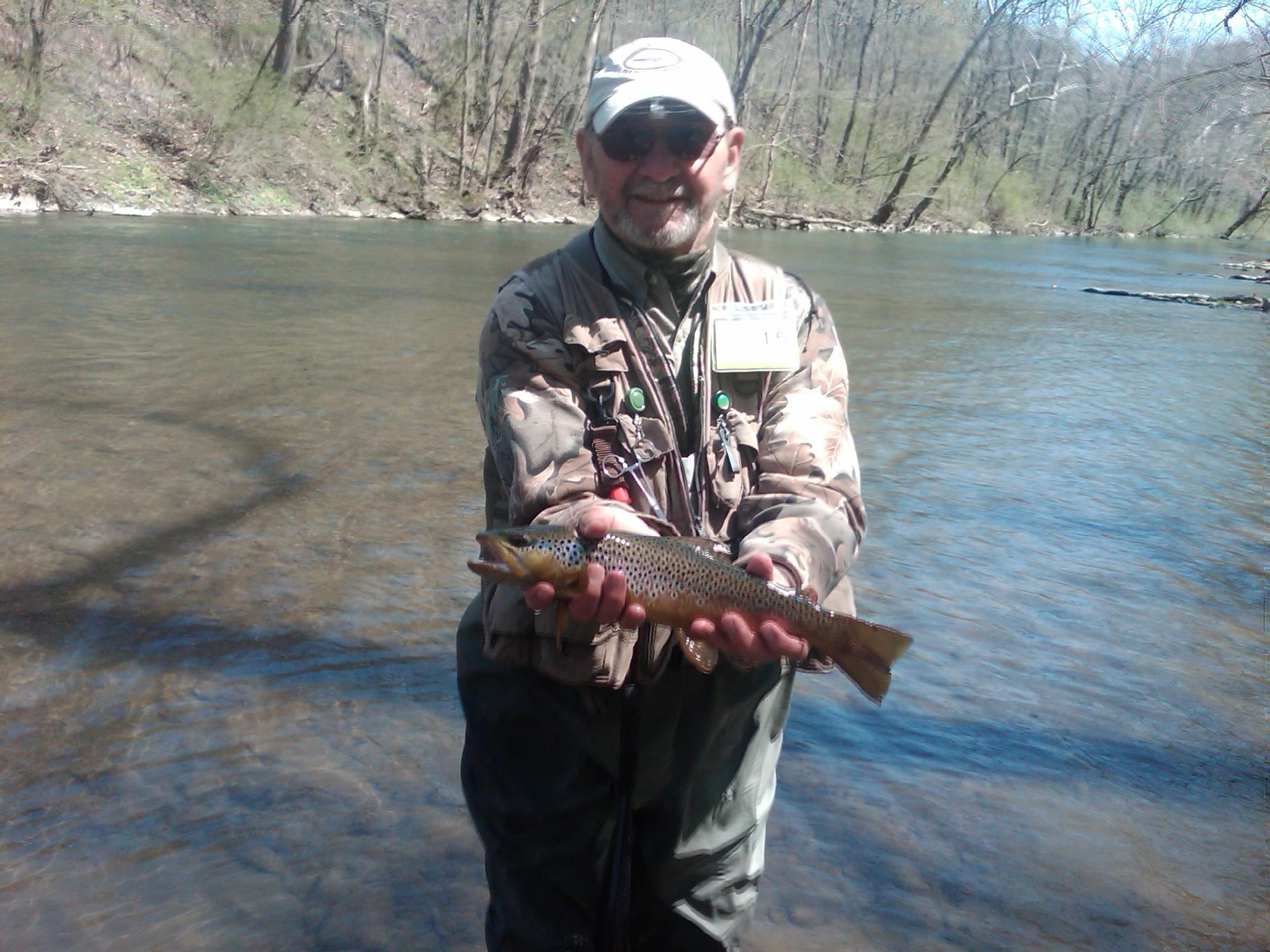
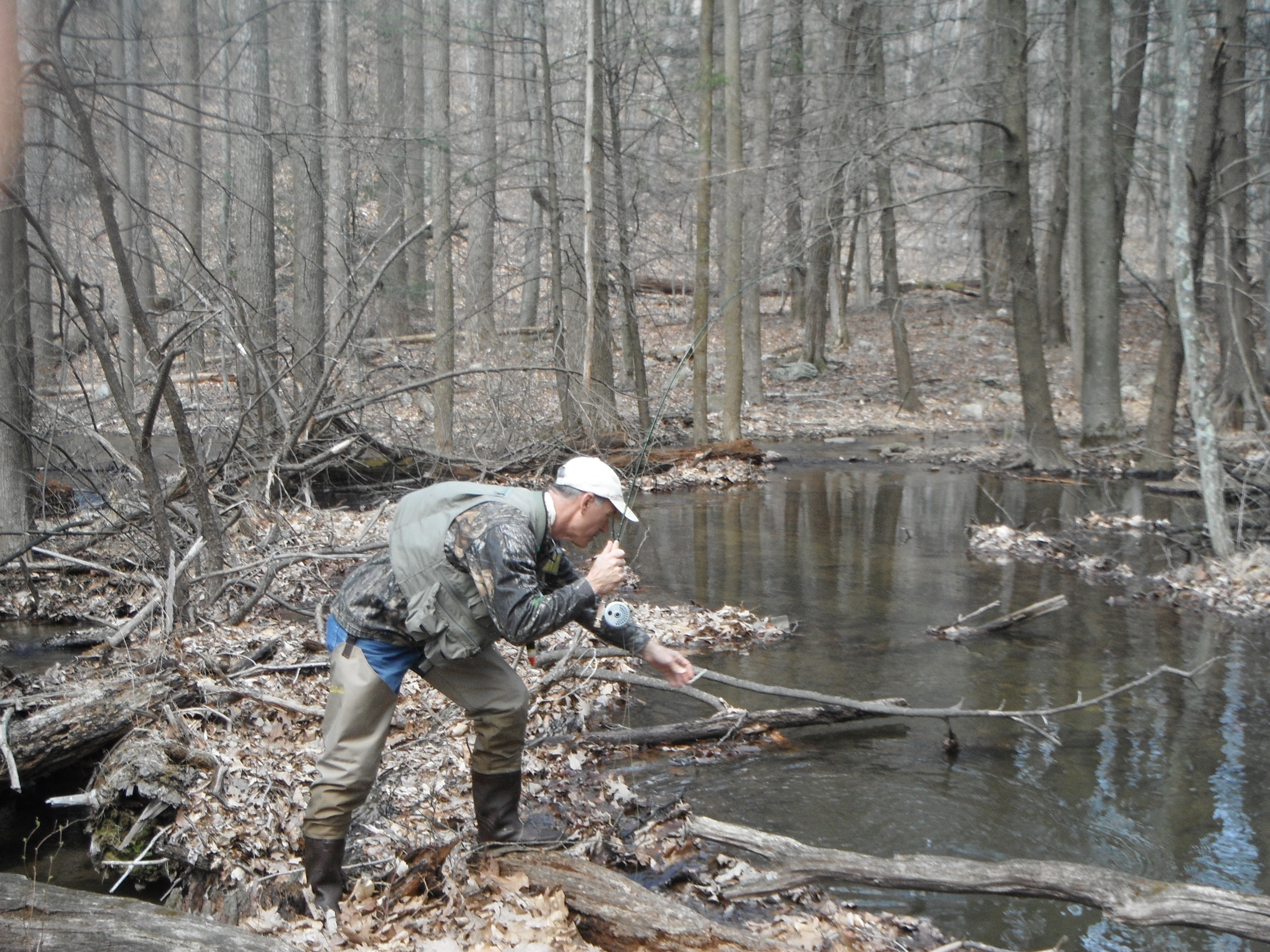
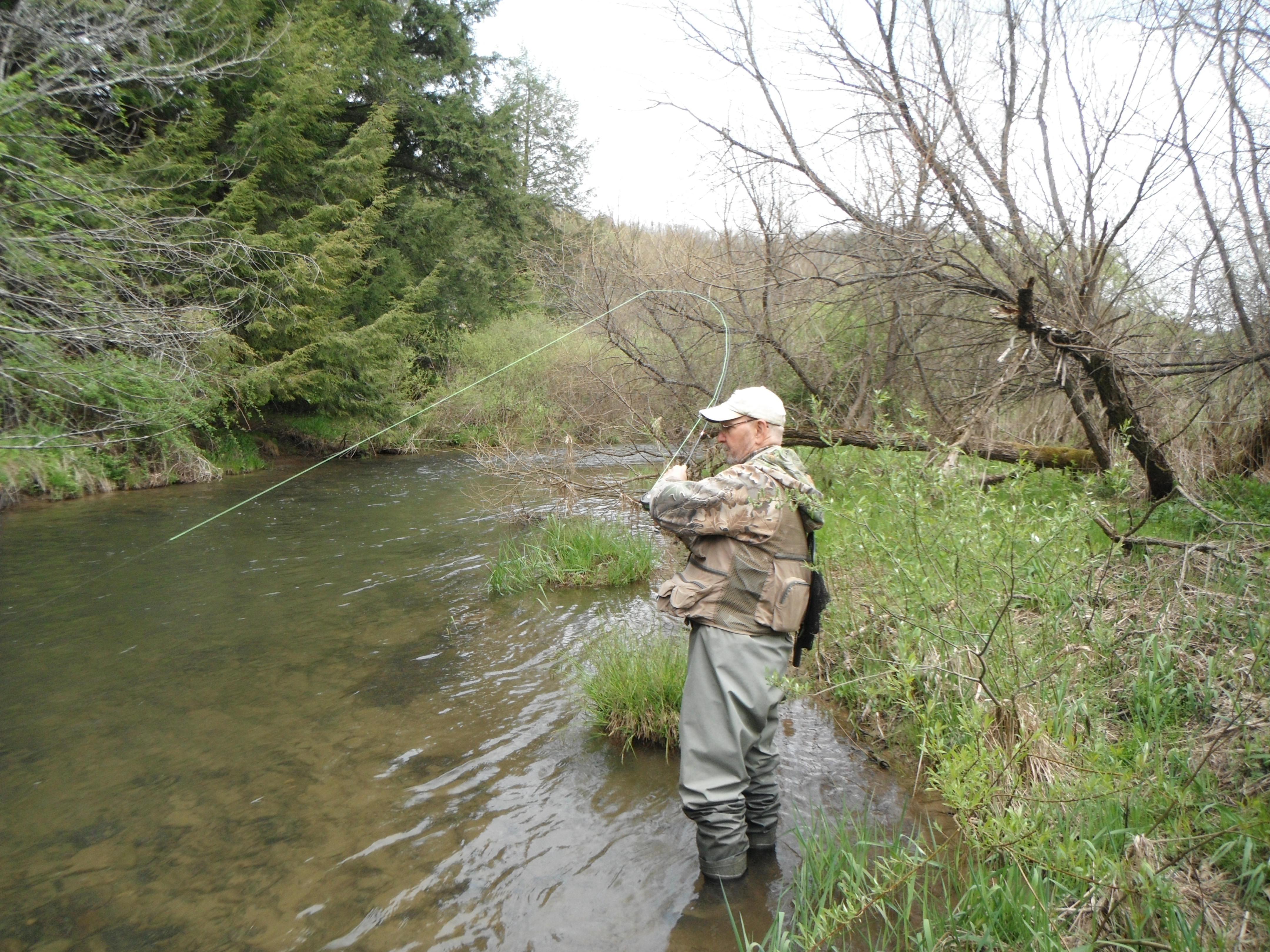
Allegheny River: I’ve written about the headwaters of the Allegheny River before, and expect to be back in early June, but again with temperatures in the 40’s, fish were not rising. This was a momentous occasion, though, as we did find one riser in one of our hotspots and Ron made a good cast and caught his first trout (14″ Brownie) on his new Beaver Meadow 7′ fly rod. The fight is shown above. Can’t wait to be back. See you in June ol’ friend!
Yellow Breeches and the Falling Spring

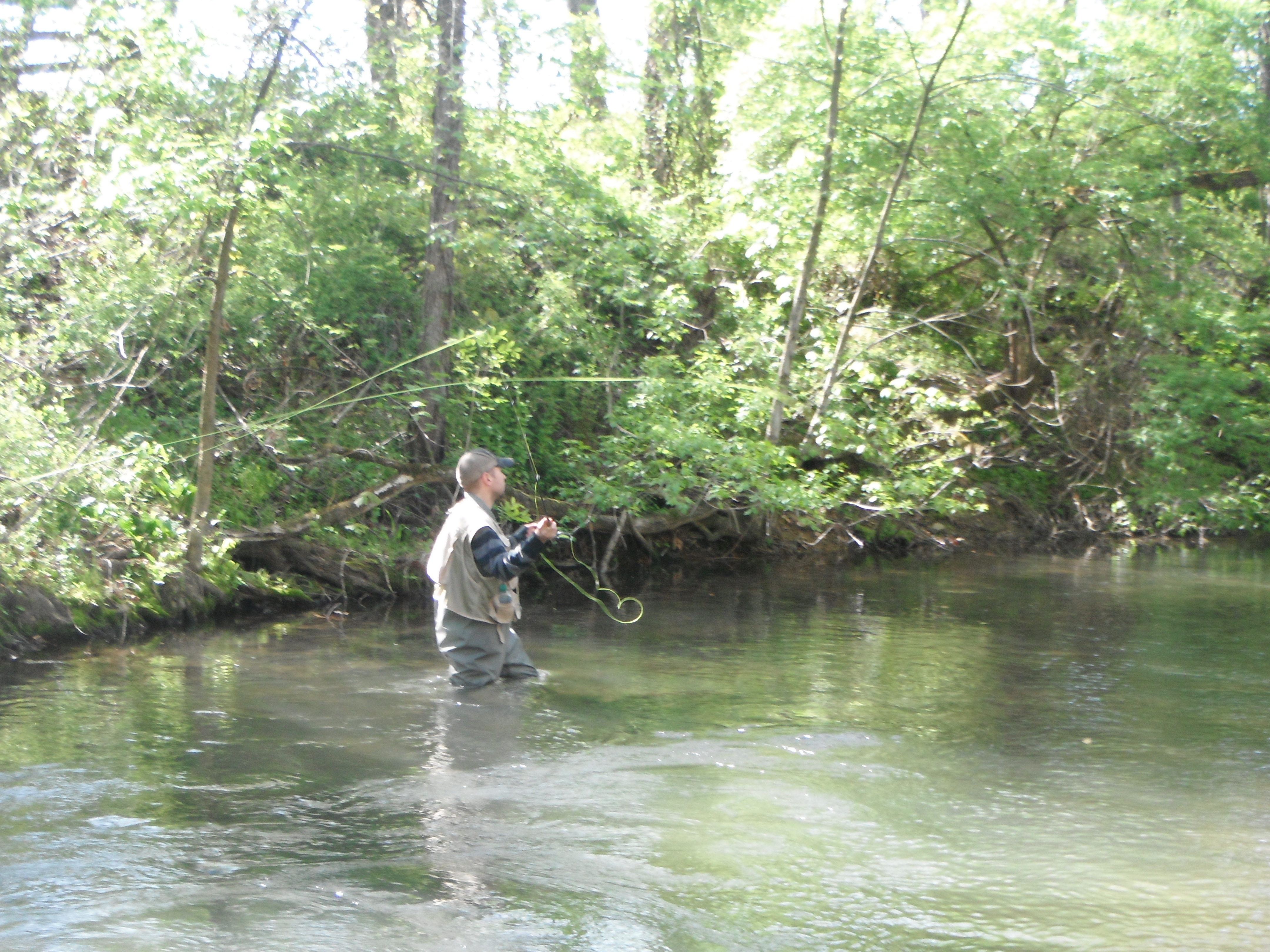
Craig Coder casting on the breechesYesterday, my youngest son, Craig,  and I spent the day fishing the Breeches after meeting my oldest son, TJ, for breakfast. My middle son, Luke, and I fished for a few hours on the Falling Spring today. You might say it was a father-son weekend. I cherished the days spending time with my Dad and Granddad (growing up) and mostly fishing the Conococheague Creek. Even though we used garden hackle (worms) back then, my Dad taught me how to read the water and how to enjoy myself along a trout stream. He also taught me important things like trout stream ethics and to not trash the stream.  It was also a tradition to cook out along the stream on the first day of trout season…..what great memories!  I owe my passion for fishing to my Dad, so I’ve tried to give this same opportunity to my sons as well. TJ is the least passionate of the 3 boys, but when he does go, can cast as good or better than any of us. Sickening!  He is also the only “techy” in the family and helped me set up my blog. Thanks TJ!

As far as the fishing goes, Craig and I caught a dozen wild browns on the upper section of the Breeches using Caddis and Parachute Adams. In the regulation area upstream from Allenberry Playhouse, we caught a handful of fish on #28 midges. There were Caddis and a few Sulphurs in the air,  but the fish were tuned in on the small stuff. The Falling Spring was not much different, as when we found fish rising with any consistency, they were sipping midges. We did each manage to fool a couple with Caddis. Each week keeps getting better, so stay tuned for the next adventure.

The Falling Spring Creek, Chambersburg, PA

DSCF0391

The locals refer to the Falling Spring as “a little gem”. I know I certainly do, because it is not only a limestone spring stream but also one I can be fishing within 10 minutes after I leave my home. The town side has a delayed harvest section starting at 5th Avenue and upstream until it crosses route 30. From there, the stream flows through the meadow along the Falling Spring road. This is the Heritage section and is Catch and Release and holds wild fish (some over 2 feet). According to “The Wonderful World of Trout” by Charlie Fox, fingerling “steelheads” were planted in the Falling Spring which were the Shasta River strain. These rainbows naturally reproduce in “the Spring”.

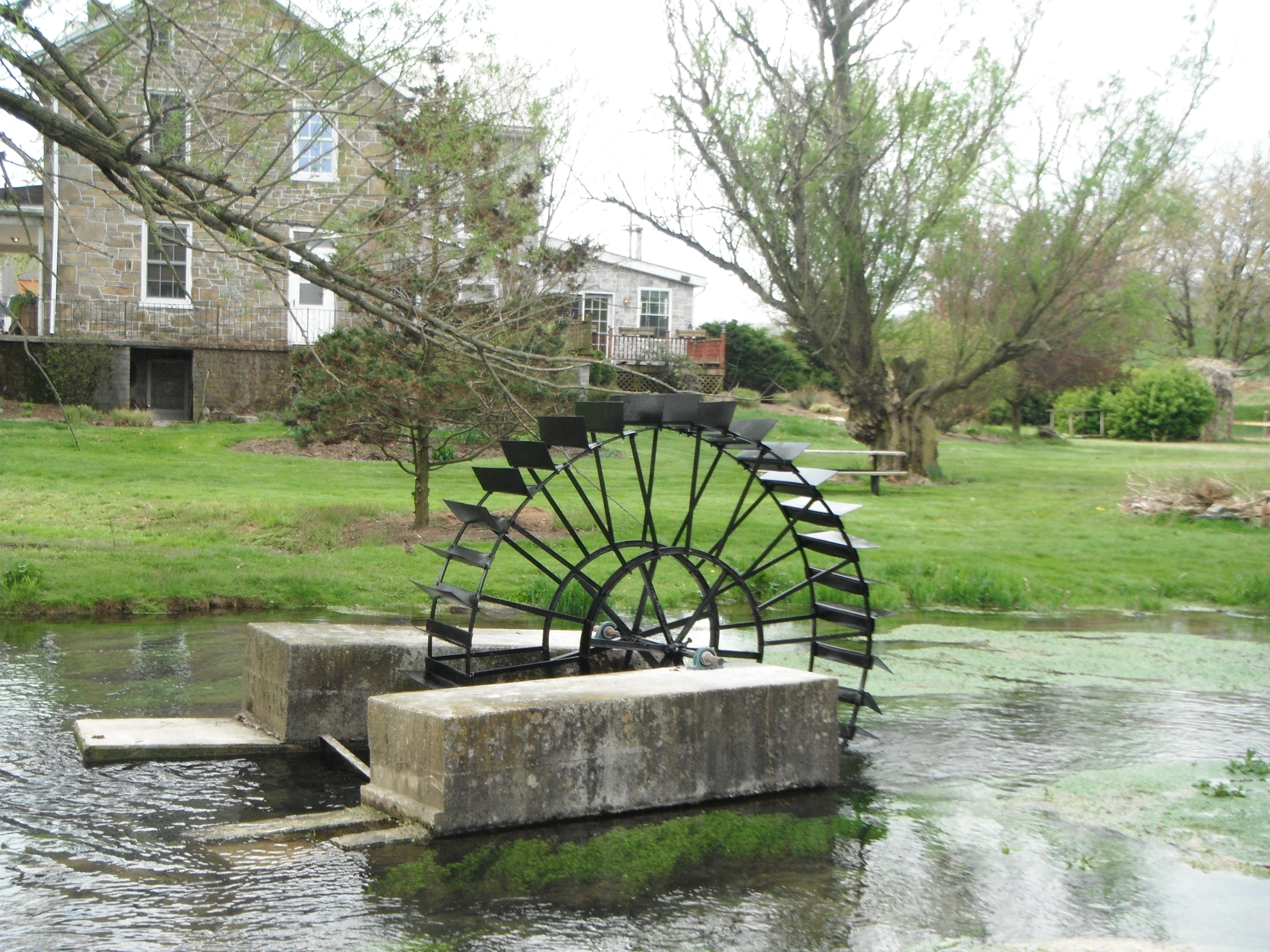
In August of 2012, the Falling Spring Chapter of Trout Unlimited completed a improvement plan with the help of the Pennsylvania Fish and Boat Commission on the stretch along the private property of Carl and Becky Helman. Recently the historic water wheel on this stretch was refurbished and reinstalled which makes a neat showcase for this scenic area of the Falling Spring.

Fishing has been picking up on the Falling Spring. Over the last week, I have spent time on “the Spring” with Ron Hill, Tim Brookens, my son Craig, granddaughter and grandson. Caddis hatches are somewhat prevalent as well as midges. Even though the trout are not actively rising, we are catching some on the surface. Sulphur hatches will be coming soon and then Tricos, not to mention the ever present opportunity to catch rising fish on ants and beetles. Dry Fly season is on!!!!

Little Juniata (Grannom Caddis hatch)

photo (2)

After a weekend of little success on Conewego, the Falling Spring and Mountain Creek, Ron Hill (brother-in-law and fishing buddy) and I decided to drive to Huntingdon, Pa to catch the Grannom Caddis hatch. Our first stop was Topp’s Diner for breakfast and our second stop was Spruce Creek Outfitters (www.sprucecreekoutfitters.org) to get some input from Allan Bright (owner) who is always helpful. Allan used to stay with another old fishing buddy’s house (Levi Keefer) near my home in Fayetteville to fish the Falling Spring. The word from Allan was that the Grannom’s had come and gone in the stretch of water near his shop so we decided to drive upriver to the Vietnam bridge…above the bridge where the Little J crosses rt. 453. Fortunately, the Grannoms were on! There was a 20 minute window when the fish were in a feeding frenzy, but after that, even though the hatch remained consistently good, rises were sporadic. During the frenzy, we hooked up with a few fish, but for the life of me, it surprises me why the trout would even take an imitation with so many live caddis dancing on the water. We stuck it out until mid afternoon hoping for another frenzy, which never came…..and with only a handful of catches and misses,  one catch made it all worth it. Ron made a great cast above an overhanging branch across a hard riffle allowing his Grannom to drift into the softer water on the far side of the riffle and hooked up with an 18″ Brown. Watching this beauty rise to Ron’s fly even had my heart pumping.

The Grannoms only last about a week on the Little J during the month of April. If you have the time, go to the stretch near Birmingham along rt. 453, within the next day or two. Or, put it on your calendar for next year. You won’t regret it!

The Yellow Breeches (near Allenberry)

Fishing is a lot like baseball. You can look like the World Series champion one day and then look like the worst team in the league the next. Every day you start out with no runs and no fish. So, here it is……after slaying the fish yesterday on Broad Run, we came close to getting skunked today. We did manage to catch 1 each on #26 midges. Tim “big fish” Brookens caught a 14″ Brook trout. The bottom line was…. very few rises and those were not consistent. Spotted a few Caddis and Hendricksons but not enough to get the fish active. We were a week late!!! We still had a good time and look forward to getting out next weekend and the slate will be clean.

Wild Brookies on Broad Run

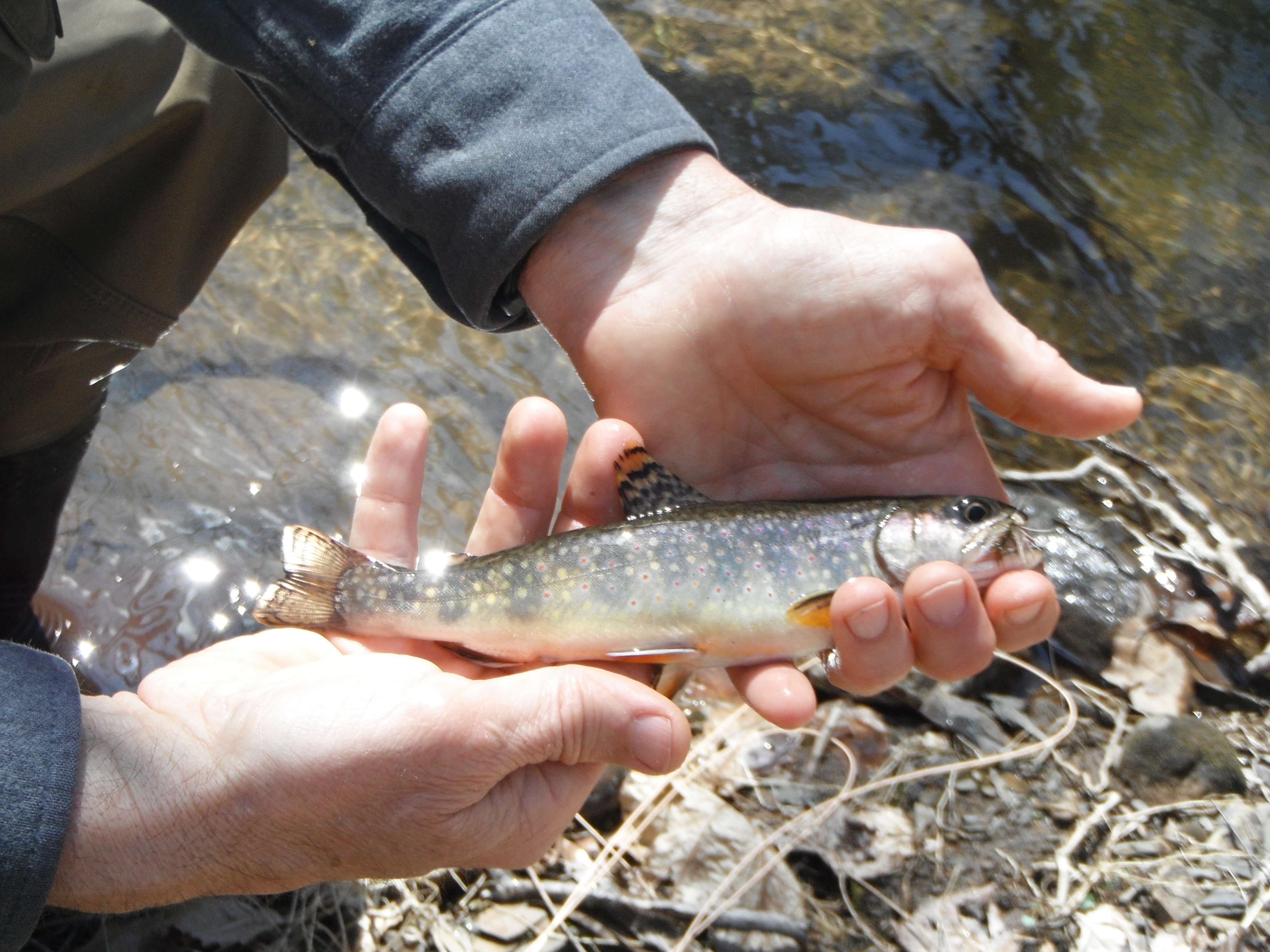
DSCF0367DSCF0368 Broad Run is a “class A” wild brook trout stream located in Lower Horse Valley. Since the water levels have come up in other streams, Tim Brookens and I decided to give this little gem of a stream a shot today. We caught over 40 of these wild beauties and a few in the 9-10 inch category. Small rods and short casts are the ticket and even then be prepared to catch some limbs based on the tight casting situations. Tim used a 6′ glass Cabela’s rod and I used my 7′ cane pole. To get there take the mountain road toward Bear Valley from Main Street Fort Loudon. Quiet, no people and lots of fish…give it a try!

Conewago Creek

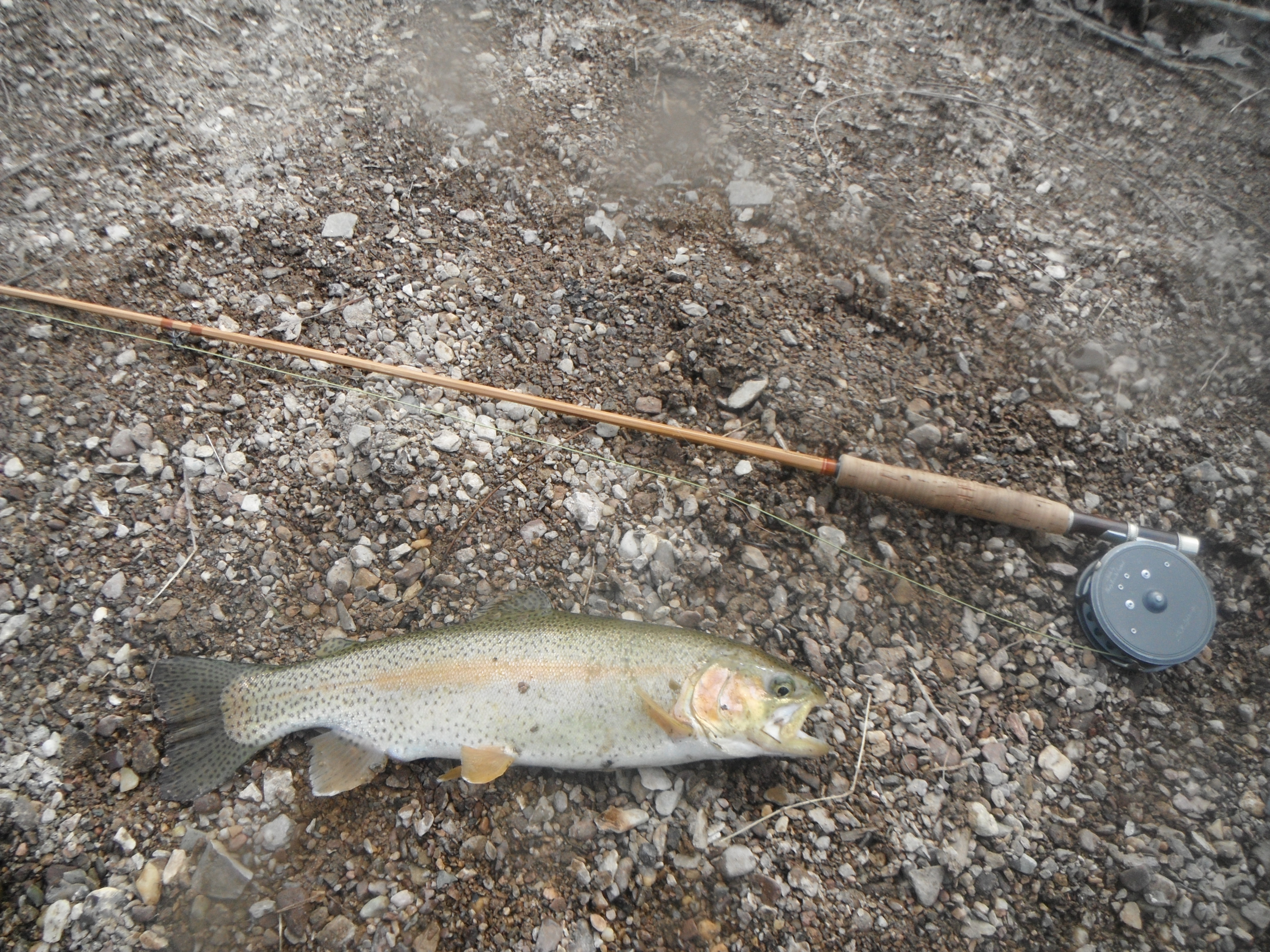
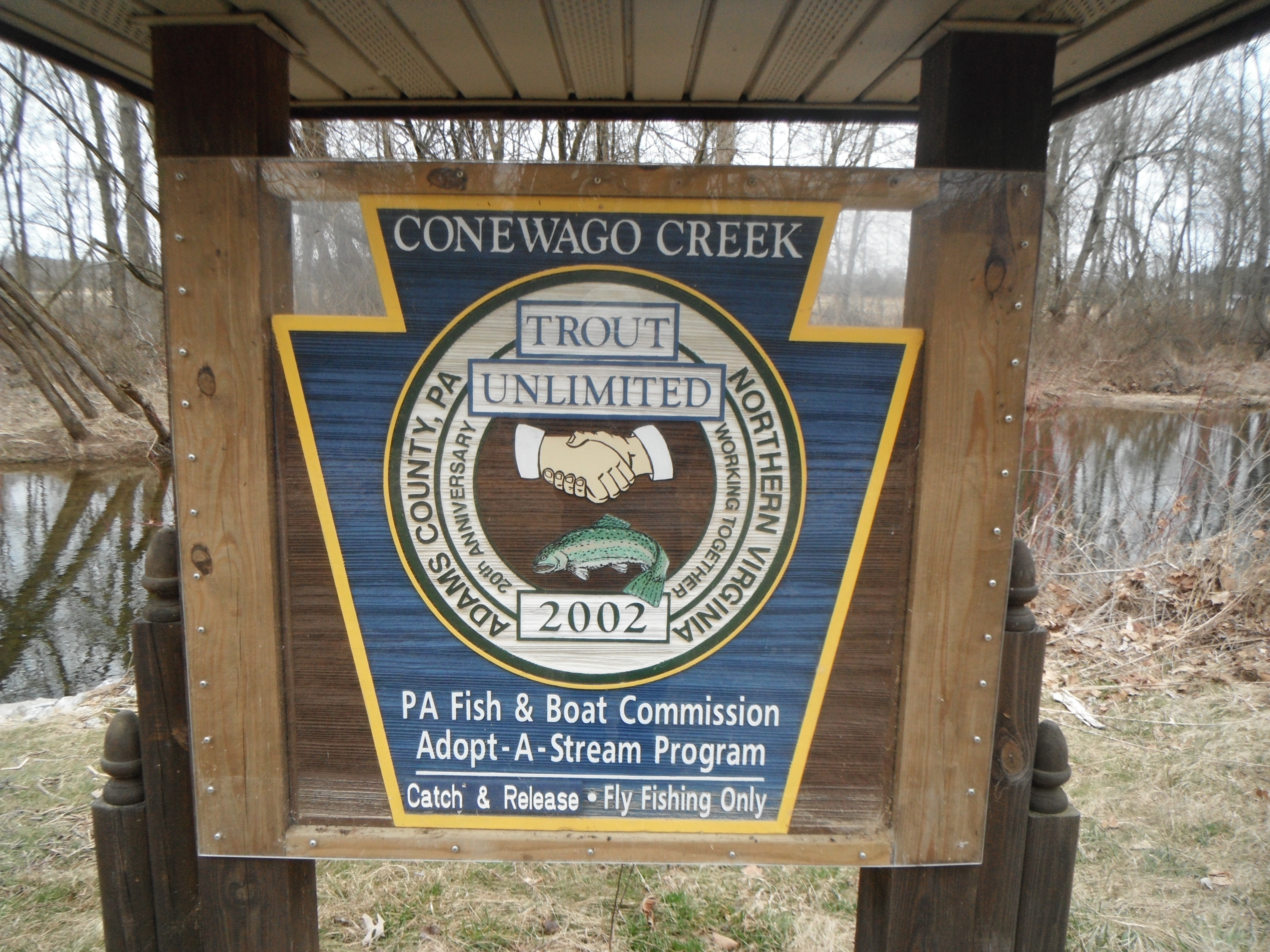
DSCF0364ImageConewago Creek is located in Biglerville, Pa and has a “catch and release” fly fishing only project area. Went there today without the expectation of seeing fish rising, but was pleasantly surprised. I found a pool upstream from the project sign with fish actively rising(sipping). I started with a BWO and caught a 16″ rainbow after many refusals. I saw some small stoneflies on the water, but the trout refused larger  flies so I changed to a #24 ICSI (I can see it) midge. There were still many refusals, but I did catch 5 more and lost a couple. Still cool weather and too much wind, but it was great getting out. Ran into quite a few fisherman who were having some success on nymphs and green weenies. Conewago is a beautiful freestone stream with repeated riffle/pools through the entire “catch and release” section. Give it a try…you won’t be disappointed.

Beaver Meadow Fly Rods

One consistent thing about avid fishermen is that if they are not fishing, they are talking about fishing or planning on the next adventure….or buying stuff for fishing. My wife says it’s not a hobby, it’s an obsession. So, after my brother-in-law (Ron Hill) and I canned the fishing plans due to the weather this past weekend,  we immediately got into the “buying stuff” mode. Ron has wanted to buy a small stream rod and based on some previous research, he built his own small stream rod called a “Beaver Meadow” rod  from the following site ;  http://www.jprossflyrods.com.

Short fly rods are the J.P. Ross specialty. They range from 5.0′ to 7.9′. Ron decided on a 7.0′ medium action rod which has the versatility of fishing small streams but bigger water as well. The website allows you to pick your grip, the reel seat and engraving, cap engraving, guides and other features. Ron and I cannot wait to put this rod to work on Cross fork Creek and others during our Pine Creek adventure in June.


Popular flies for the Pennsylvania flyfisherman

Although, the flies I will discuss are not the only flies to fish with in Pennsylvania, and they are not limited to this state….I will cover some popular ones, and flies recommended you have in your possession. I could not begin to cover all species.

As discussed before, flies are in 3 categories -mayflies, caddisflies and stoneflies. Blue Winged Olives, Tricos, and midges and sulphurs are all mayflies. Caddis are tent winged flies and have no tails like mayflies do.

Caddis flies – Because of the many species, caddis can be found fluttering on the water from spring and into fall and throughout the day. Caddis is a great fly to use while fishing riffles and can dredge up fish even when nothing is hatching. Many fly fishernan say if they only carried one fly in their box, it would be a caddis. When a good caddis hatch is on, “Kady bar the door.” The Grannom caddis hatch on the Little Juniata in April is a good example of this.

Blue Winged Olives – “BWOs” are another great fly to have in your arsenal as they can be on the water from spring into the fall, They typically hatch in cool misty weather, but also on overcast days.

Tricos – This small mayfly starts around the beginning of July and lasts until the first frost. Look for tight swarms in the mornings. The female breeds with the male, and dies. Trout are very actively sipping these dead flies while this hatch is on. They tend to get smaller as the season goes on and patterns in the size #26 version are a must as the trout can be very selective.

Midges – Fishing midges are overlooked by a lot of flyfisherman for the fear of going to small as it requires using 7X or 8X tippet.  Midge hatches can be found even in winter. Sunny days seem to bring them out. A popular pattern to use is a griffith’s gnat. I like to use a gray hackle fly which I learned to tie from my old fishing buddy, Levi Keefer.

Sulphurs – There are many patterns and sizes of this mayfly which begins the end of May/early June timeframe. In many cases the hatch comes off late evening and after dark. Sulphurs can bring the large trout to the surface.

I will cover additional flies as the season goes on as well as terrestials (ants, beetles, hoppers). Stay tuned!

Fly Life Cycle

One of my blog followers ask for pictures of common mayflies. Before I post some of the popular flies mentioned in previous posts, I decided to start with the life cycle of a fly…so as fly fisherman, we can understand what the trout are feeding on in various stages.

Simply put, the stages are: egg, nymph, emerger, dun, spinner, adult mayfly

Spinners: Mature females lay their eggs on the water producing larvae.

Nymphs: The larvae turn into nymphs – when trout are not rising they are likely feeding on nymphs.

Emergers: Nymphs migrate or emerge to the surface, therefore called emergers.

Duns: When the nymph molts (produce wings) the bug is now called a dun. The dun sits on the surface in order to dry its wings and then becomes an adult mayfly.

Adult mayflies then become spinners…the males and females mate…. the females lay their eggs on the surface and the cycle starts all over again.

The types of flies are cyclical, so it is now up to us fly fisherman to focus on the type of fly, size, shape and color. Since, I mentioned on previous posts, that I am a dry fly fisherman, I focus on the duns and adult mayfly/spinner stages. Stay tuned for the more popular ones on the Pennsylvania trout streams.